

Should You Hire an Investigator Before Filing a Claim?
Last Updated: November 18, 2026
Quick Summary
Hiring an investigator before filing a claim makes sense when the facts are disputed, key witnesses may be hard to reach, or the insurer is likely to challenge your injuries. Planning early lets you see what the record will show before the adjuster does. For clear-cut losses with documented evidence, an investigation often isn't worth the cost.
Investigate when at least two factors apply, such as disputed facts or hard-to-locate witnesses.
Skip an investigation for straightforward claims with a clear police report and cooperative witnesses.
Preserve perishable footage quickly, since it is often overwritten within days or weeks.
Define the investigator's objective, deliverables, and budget cap in writing before work begins.
Review findings with your attorney before the claim is submitted.
Should you investigate before filing?
Eyewitness Investigations & Surveillance helps Florida claimants gather facts before the insurer does.
Table of Contents
Why Insurers Investigate Claims and Why Claimants Should Plan Ahead
Hiring an investigator before filing a claim can help you understand what the record will show if the insurer later questions what happened. Insurance companies investigate claims as a routine part of their process, and they often do it before you hear from them. Planning ahead means you know what the file will show before the adjuster does.
Insurers look into claims for several reasons. They want to confirm the loss happened as described, check the extent of injuries, and verify that the claimed damages match the facts. Many carriers also use surveillance and public records searches when a claim seems inflated or inconsistent.
Planning early gives you time to gather facts while memories and evidence are still fresh.
When to Hire a Private Investigator Before You File
A private investigator is most useful before a claim is filed when the facts are unclear, when the other party disputes what happened, or when you expect the insurer to challenge your injuries or losses, since deciding whether to engage an investigator before filing gives you control over the record. Eyewitness Investigations offers statewide Florida insurance claims investigations that cover surveillance, witness interviews, and accident-scene documentation. The reason to move early is practical: once a claim is submitted, the insurer controls much of the information flow, and you are reacting to surveillance and record requests rather than shaping the record yourself.
Use a simple decision framework. An investigation tends to be worth the cost when at least two of the following are true:
The facts are genuinely disputed. The at-fault party tells a different story, witness accounts conflict, or there is no police report to anchor the timeline.
A key witness is hard to locate or may disappear. Witnesses move, change phone numbers, and lose interest. A recorded statement taken now is worth more than a name on a crumpled card.
Your injuries are the kind an insurer will test. Soft-tissue injuries, chronic pain, and conditions with subjective symptoms are common targets for surveillance and activity checks.
There is a pre-existing condition or prior claim in your history. You want to know what the records will show before the adjuster frames it.
The at-fault party may be uninsured or underinsured. Establishing liability and locating assets early affects whether a claim is even worth pursuing.
The loss involves a workplace, commercial, or premises dispute where multiple parties and policies may be in play.
Just as important is knowing when not to hire one. A straightforward collision with a clear police report, cooperative witnesses, documented medical treatment, and an insurer that has accepted liability rarely justifies the expense. The same is true for small claims where the likely recovery is close to the investigation cost.
Watch out: hiring an investigator to "find something" on the other side is a common mistake, so define the question before you bring in an investigator before filing anything. Define the specific question you need answered, who witnessed the collision, whether the at-fault driver was working at the time, whether a prior injury explains the current symptoms, before you spend a dollar. An investigator without a defined objective produces a bill, not evidence.
If your attorney is already involved, coordinate before you hire anyone.
Evidence Gathering Before Filing a Claim: What to Preserve First
The first steps after a loss matter most, and the pre-filing window is when evidence is easiest to capture and hardest to reconstruct later. Treat this as a workflow, not a checklist.

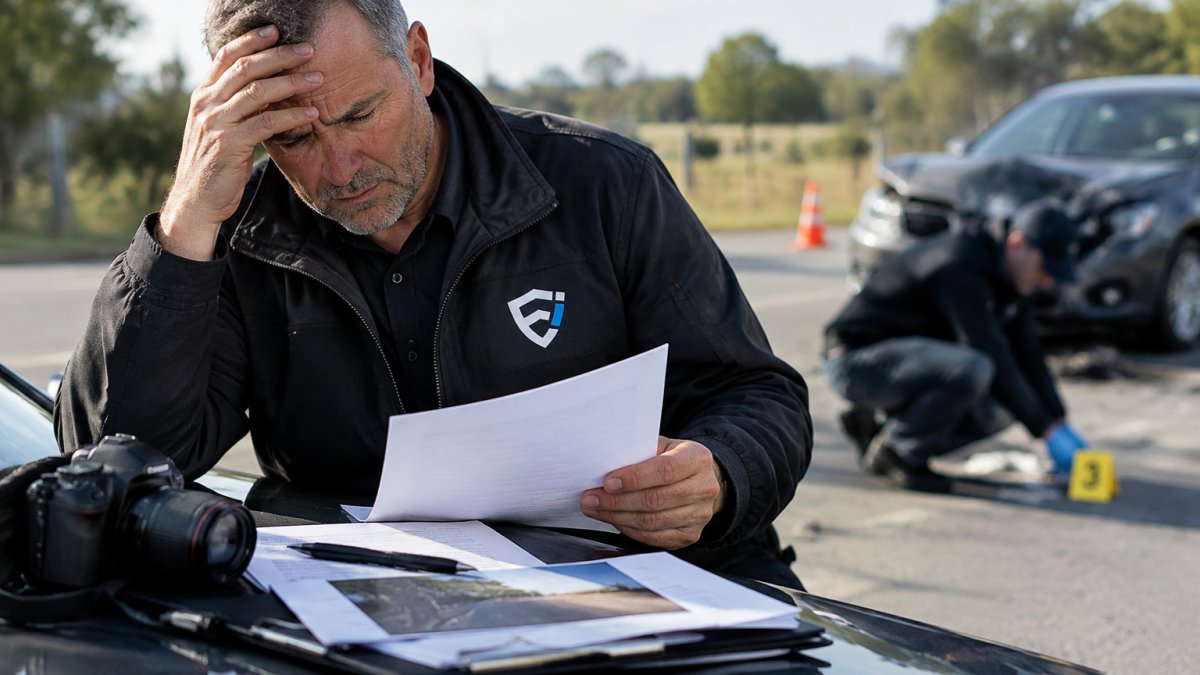
Step 1: Lock down the perishable evidence within days. Photos and video of the scene, vehicles, and visible injuries; names and phone numbers of witnesses; the police report number and responding agency; and any dash-camera, doorbell, or business surveillance footage. Footage is routinely overwritten within days or weeks, so send a written preservation request to any business or property owner that may hold it. A short letter or email asking them to retain the recording is often enough to prevent automatic deletion.
Step 2: Build the medical and wage record in parallel. Keep every treatment note, imaging report, prescription record, and billing statement. For lost wages, collect pay stubs, employer letters, and time records. These documents establish the damages baseline the investigator will later test against.
Step 3: Preserve your own digital footprint without altering it. Do not delete social media posts, even ones that look bad. Deleting material can be treated as spoliation of evidence and can create bigger problems than the content itself. Instead, download an archive of your own accounts so you know what is public, and avoid posting about the incident, your injuries, or your activities until the claim resolves.
Step 4: Write a plain timeline while memory is fresh. Date, time, weather, who said what, and the order of events. A contemporaneous timeline is one of the most useful documents you can hand an investigator or attorney, and it costs nothing to create.
Step 5: Define the investigator's scope in writing. Before work begins, put the objective, the deliverables, the reporting cadence, and the budget cap in the engagement letter. Ask for a written report with source citations, who was interviewed, what records were pulled, what was observed and when, rather than a verbal summary.
Step 6: Vet the investigator before you sign. Confirm the license through the state licensing authority and ask whether they have testified in depositions or trial. A legitimate investigator will not guarantee an outcome.
Watch out: an investigator who promises a specific result, refuses to put the scope in writing, or cannot produce a license number is a red flag. So is anyone who suggests obtaining records through pretext or misrepresentation, that can taint the evidence and expose you to liability.
Step 7: Coordinate findings with claim preparation. When the report comes back, review it with your attorney before the claim is submitted. The goal is not to hide unfavorable facts but to know what the file will show, correct any errors while records are still available, and prepare a claim narrative that accounts for them. Share evidence with your attorney before you give recorded statements to any insurer.
A common pattern is that the most valuable pre-filing work is unglamorous: preserving footage, locking in witness statements, and building a clean document trail. Surveillance footage and witness memory are the two things that degrade fastest, and both are far cheaper to secure now than to reconstruct after a claim is filed.
The first steps after a loss matter most, and the table below summarises the order the article recommends.
Step | What to do | Timing |
Lock down perishable evidence | Photos, witness names, police report number, footage | Within days |
Build medical and wage record | Keep treatment notes, bills, pay stubs, employer letters | In parallel |
Preserve digital footprint | Do not delete posts; download an archive | Until claim resolves |
Write a plain timeline | Date, time, weather, who said what, order of events | While memory is fresh |
Define investigator scope | Objective, deliverables, cadence, budget cap in writing | Before work begins |
Vet the investigator | Confirm license and testimony experience | Before signing |
Coordinate findings | Review report with attorney before submitting claim | Before filing |
What Investigators Look For and How Findings Affect a Claim
An investigator reviews facts from several sources. They may check public records, interview witnesses, document accident scenes, and observe activity that is lawful to watch from a public place. Their goal is to report what they find, not to reach a result.
CAR ACCIDENT EXPERT
Findings can help or hurt a claim. Accurate documentation can support your version of events and confirm your losses. Inconsistencies, such as activity that conflicts with a stated injury, can reduce the value an insurer assigns. Because findings can cut either way, many attorneys prefer to see them before a claim is submitted.
Private Investigator Legal Limits in Florida
Florida investigators must follow state law, and a licensed investigator understands these limits. Florida private investigators are licensed under state law. Check the license status of any investigator you consider.
Investigators cannot trespass, wiretap, or access private records without legal authority. You can read more about how investigators protect confidentiality and stay within legal boundaries before you hire one. Lawful surveillance generally happens in public view. Evidence collected improperly may not be usable later, so confirm the scope of work with your attorney in writing.
Learn more about confidentiality standards from Florida Statutes Chapter 493 on private investigative services.
How Much a Private Investigator Costs and How to Budget
Investigation costs vary with the time involved, the distance traveled, and whether surveillance is ongoing. To see how surveillance investigator rates are structured in Florida, review the breakdown before you set a budget. Ask for a written estimate that lists the hours and expenses included. You can request a private investigator estimate for your own case to compare costs before committing.
To budget well, set a limit before work begins and agree on how you will be updated. Ask whether the fee covers report preparation and court testimony. Clear terms reduce surprises at the end.
Deciding Whether to Hire an Investigator Before Your Claim Goes In
Use these questions to decide:
Is the claim large enough to justify the investigation cost?
Are the facts disputed or hard to confirm?
Has the insurer already signaled it will investigate?
Does your attorney recommend an investigation?
If most answers point toward yes, a free consultation can help you judge whether an investigation fits your situation. Book a free consultation with Eyewitness Investigations & Surveillance to talk through your case before you file.
Eyewitness Investigations & Surveillance is led by retired Law Enforcement Officer Mark McNeely, who served 20 years and spent 17 of them as a Traffic Homicide Investigator for the Florida Highway Patrol. Our licensed team serves clients across Florida.
Frequently Asked Questions
Why would an insurance company hire a private investigator?
Insurers hire investigators when a claim shows warning signs such as inconsistent injury reports, activity that conflicts with stated limitations, unusual timing, or prior claims that overlap. The investigator documents facts through public records, lawful observation, and interviews so the adjuster can decide whether the claim is valued fairly. An investigation does not prove fraud on its own, but it gives the carrier verified information to evaluate the claim against the evidence.
Is hiring a private investigator considered harassment?
Hiring an investigator is not harassment in itself. Florida investigators must hold a license issued by the Florida Department of Agriculture and Consumer Services, Division of Licensing, and their work must stay within the law. Harassment becomes a concern when surveillance is repeated, intrusive, or directed at a person in ways that frighten or intimidate them, or when an investigator trespasses or records where privacy is expected. Ask any investigator to explain how they stay within legal limits before you hire them.
How much does a private investigator cost?
Costs depend on the scope, duration, and complexity of the work. At The Eyewitness, pricing for investigation and surveillance engagements ranges from $500.00 to $3,400.00 on the published product catalog, and a surveillance retainer is listed at $2,400.00. Ask for a written estimate that states the hourly or retainer structure, expected expenses, and what happens if the scope changes mid-investigation so you are not surprised by additional charges.
When should you hire a private investigator before filing a claim?
Consider hiring an investigator before filing when the incident involves disputed fault, a crash with no independent witnesses, a workplace injury with questionable details, or a situation where you expect the insurer to investigate you. Early work helps preserve evidence and document conditions while they are fresh. If the facts are simple and fully documented by police reports and medical records, an investigator may not add enough value to justify the cost.

Comments